In today’s digital world, sharing moments of our lives online has become second nature. Parents proudly post pictures of their children, schools and community groups celebrate milestones, and organizations use photos of youth to showcase events. While these intentions are often positive, posting images of children under the age of 18 on public groups or platforms raises serious concerns around privacy, safety, and legality.
Children’s Right to Privacy
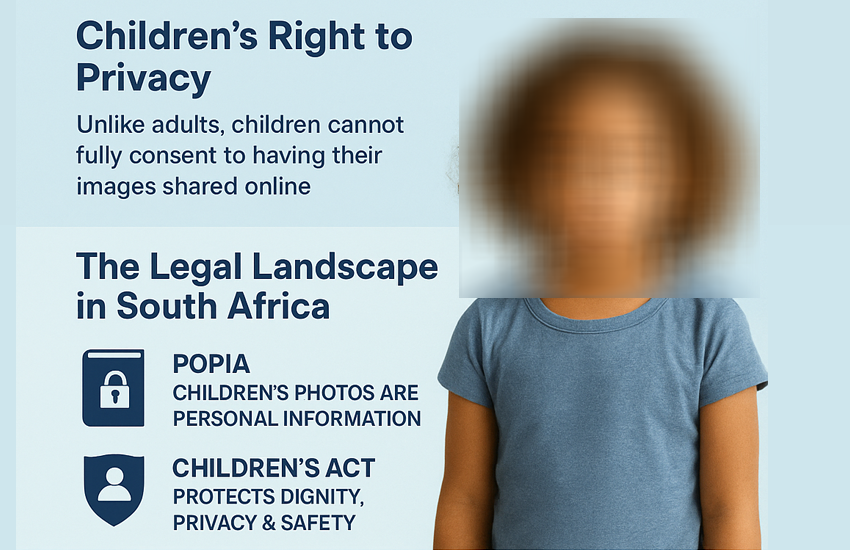
Unlike adults, children cannot fully consent to having their images shared online. Even when parents or guardians provide permission, once an image is uploaded to a public group, it is no longer under their control. Anyone can download, share, or misuse the photo—potentially exposing the child to risks now or in the future.
The Legal Landscape in South Africa
South Africa’s Protection of Personal Information Act (POPIA) classifies photos of children as personal information. This means consent from a parent or legal guardian is required before publishing. Additionally, the Children’s Act (38 of 2005) protects children’s rights to dignity, privacy, and protection from exploitation.
Posting images without proper safeguards can therefore not only put children at risk but may also have legal consequences for individuals and organizations.
The Risks of Public Posting
- Exploitation and misuse: Photos can be taken and circulated without consent, sometimes ending up in harmful spaces.
- Cyberbullying and harassment: Images shared widely can make children targets.
- Digital permanence: Once online, photos are nearly impossible to remove completely.
- Unintentional exposure: School uniforms, location tags, or visible landmarks can give away sensitive information.
Safer Alternatives and Best Practices
To protect children online, it is vital to:
- Avoid posting identifiable images of children in public groups.
- Use private or closed groups with restricted access if sharing is necessary.
- Always obtain written parental/guardian consent before posting.
- Blur faces or crop identifying details when showcasing events.
- Think carefully: Would this post put the child at risk if seen by strangers?
A Collective Responsibility
The Internet is a powerful tool for connection and storytelling, but it also carries responsibility. Protecting children’s rights online is a duty shared by parents, schools, organizations, and communities. By being cautious about posting children’s images, we can create a safer digital environment for the next generation.
At the Internet Society South Africa Chapter, we advocate for a safer, more inclusive Internet. Together, let’s make responsible choices to protect our children online.